

Animal breeding
Did you know that:
Domestication of animals has probably taken place gradually, the half-wild phase may have lasted long. Prehistoric humans were able to catch wild animals and place them into an enclosed area where they gave them protection and food until these animals reached the slaughter weight. Domesticated species began to distinguish themselves only as a result of targeted crossbreeding of individuals with desired properties – fleshier, tamer, healthier.
Cattle has gradually been domesticated since the Neolithic, but it was a long-term process. Animals were bred for meat, milk, furbut also as a source of workforce. Since the Late Stone Age we know evidence of a team of animals used for ploughing.
Did you know that:
From the animal bones discovered we find out that animals got smaller as a result of domestication. The height at wither in Iron Age cattle was ca. 110 cm, in early medieval horse it did not exceed 140 cm.
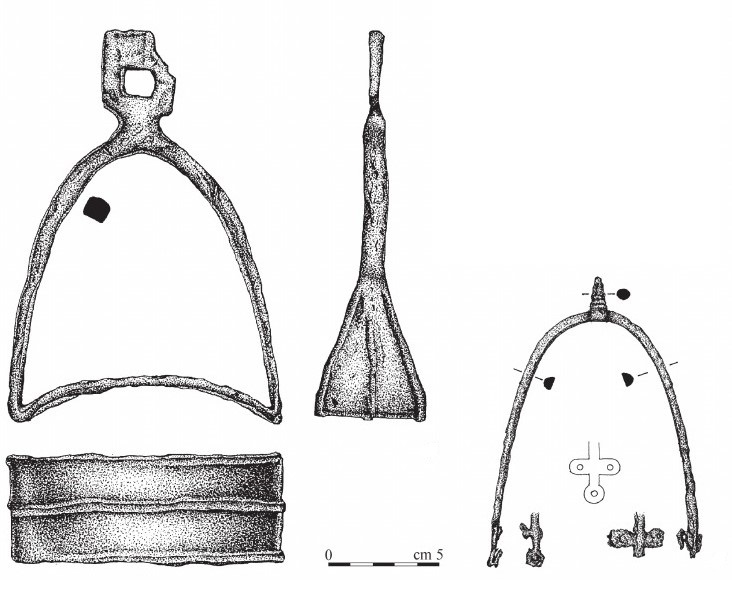 The spectrum of bred animal species is in no way surprising: domestication of aurochs gave rise to domestic cattle breeds; the wild ancestor of domesticated pig was wild boar. Cattle and pigs probably were the most frequently bred species; sheep and goat also were bred. The situation with poultry has been complicated by the fact that bird bones are usually poorly preserved. However, we know that chicken, geese as well as ducks were domesticated species. Hunting was not the main source of food, but it surely was a welcome addition. A significant component of diet, above all in Slavic environment, were fish – they hardly leave any archaeological evidence but we are able to identify the fishing tools, for example harpoons, fishhooks or fishnet weights. An important animal was horse. Cattle were used as draught animals for ploughing; the exceptional value of horse consisted in its use for riding purposes. The finds of horse bones in the hillfort come from both the Hallstatt Period and the Slavic Period.
Did you know that:
Greyhound is an interesting dog breed from a cultural point of view. It already appeared in Ancient Egypt, in the Celtic world as well as in the antique Mediterranean region. We can identify various variants of this breed throughout history and it always had a touch of a noble dog breed and a first-rate hunter. Greyhounds were not widespread in the early medieval Slavic world. Through Upper Silesia, however, passed one of the side branches of a famous trade route: Amber Road, which ended in the Baltic. In that area there were trading posts of the Varangians (Vikings) who have bred the greyhound-type dogs. We probably will not be far from the truth when we say that in this case the dog represented luxurious property of its master, maybe the jewel of his pack and a luxurious gift or ware, which was brought to Chotěbuz.
Another animal species with strong cultural links to humans is dog. Recent finds show that dog is already accompanying humans for at least 14,000 years. The consumption of dog meat may have been only exceptional because not only that it was not necessary with regard to the large amount of bred pigs and cattle but, moreover, the value of dog as a companion and guardian was much higher. The finds of dog bones at Chotěbuz come again from both prehistory and medieval times. A remarkable finding is known from the year 2005 when unusually long dog bones were discovered. With the help of a series of analyses and comparisons it was possible to identify the dog breed as the Polish Greyhound or a breed similar to British Greyhound, which was entirely unique on our territory at that time. The bones were found in the northern part of the acropolis, in the place of a supposed residence of local ruler.