


Prehistoric inhabitants of the hillfort
Did you know that:
It was mainly due to long-distance trade that Europe beyond the Alps came into contact with higher-developed civilisations. During the first century of existence of the Hallstatt Period settlement at Chotěbuz-Podobora, in the Near East flourished the Assyrian Empire and the Phoenicians founded Carthage. When the settlement at Chotěbuz has declined in the 5th century BC, the Greeks have fought against the Persians, Athens and Sparta were at the top of their power, and the early Roman Republic began to develop.
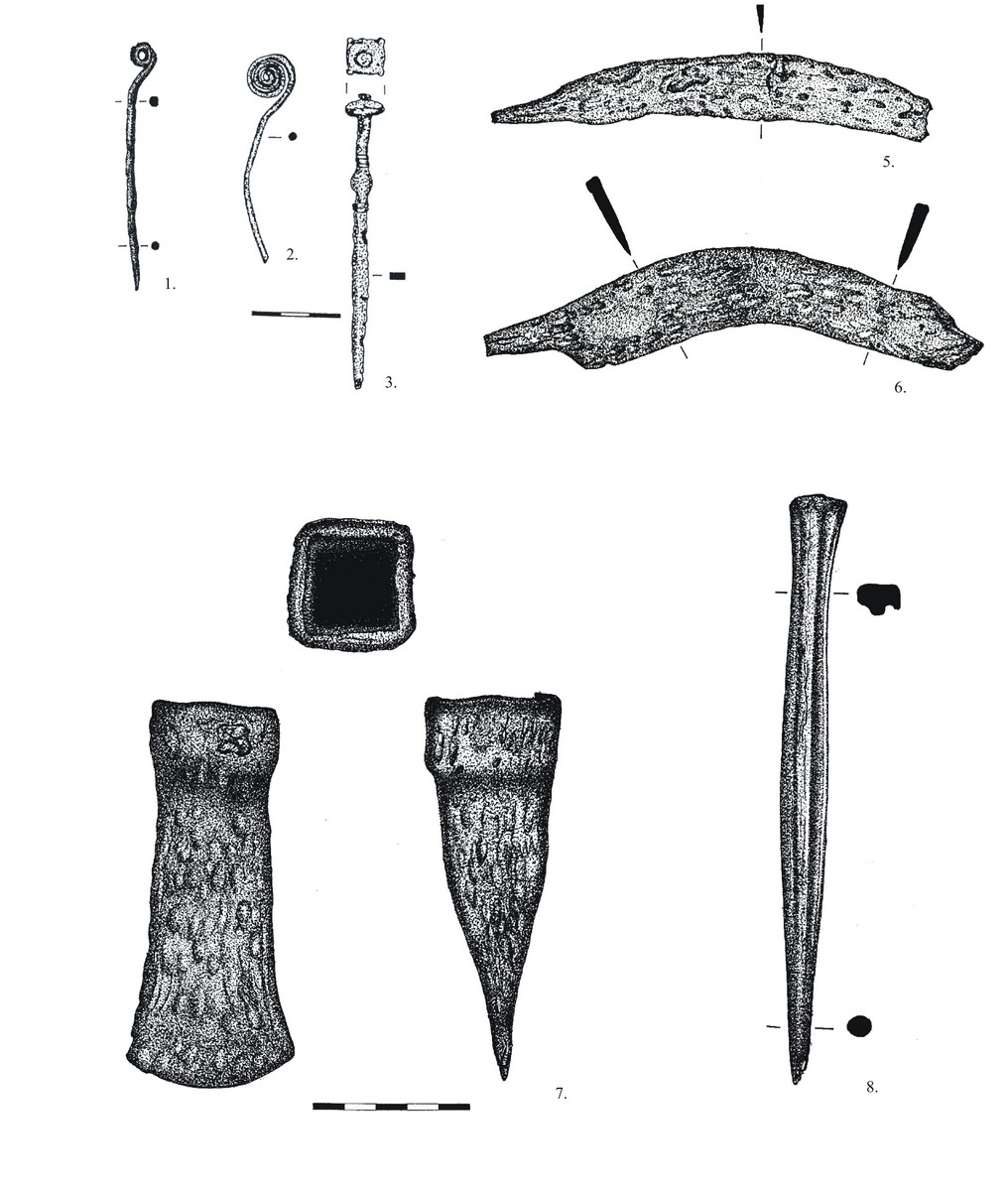
The Lusatian Culture has built on the Bronze Age traditions and developed them further in the Iron Age. One of the well-observable phenomena of that time was an increasing social stratification. In the Hallstatt Period we thus find besides ordinary graves also entirely exceptional so-called princely burials, where the dead have been buried together with immense riches. The existence of a sort of prehistoric aristocracy is also confirmed by finds of small enclosed manors within settlements. This all is still corroborated by the luxurious artefacts found. The spectrum of Hallstatt society, however, was more varied. The base of the imaginary pyramid consisted of a wide class of peasants and the top was represented by the above-mentioned “princes”. Close to the princes were warriors, above all the equestrians. Frequent evidence of long-distance trade shows that a special, surely significant, group of merchants also must have been established. Since the Bronze Age we also must suppose the existence of specialised craftsmen. The privileged status among them probably had the metallurgists, metal founders or blacksmiths.
An evidence of advanced social stratification also is the existence of hillforts. Their construction requires a higher form of organisation – a person or a group of people who were capable of coordinating the cooperation within a larger community.
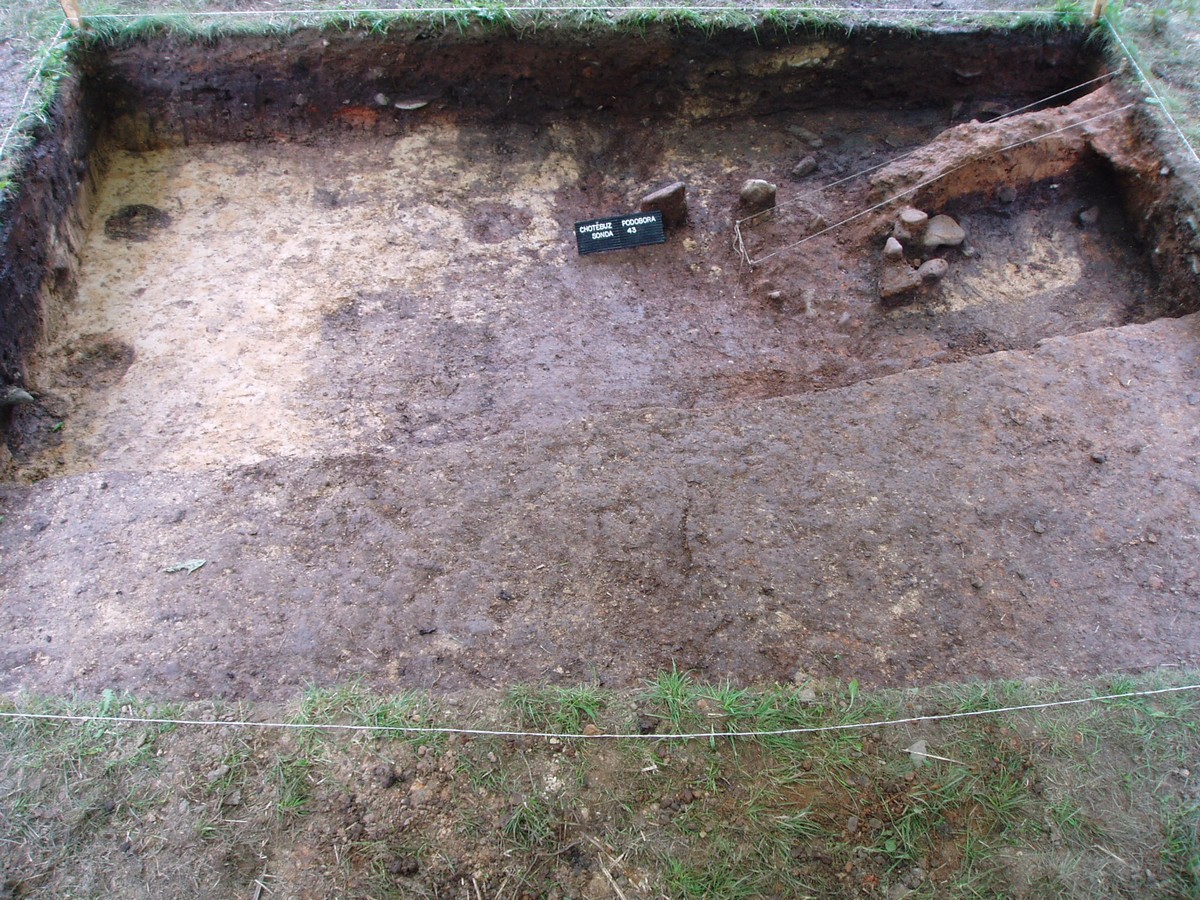
The rest of pole construction
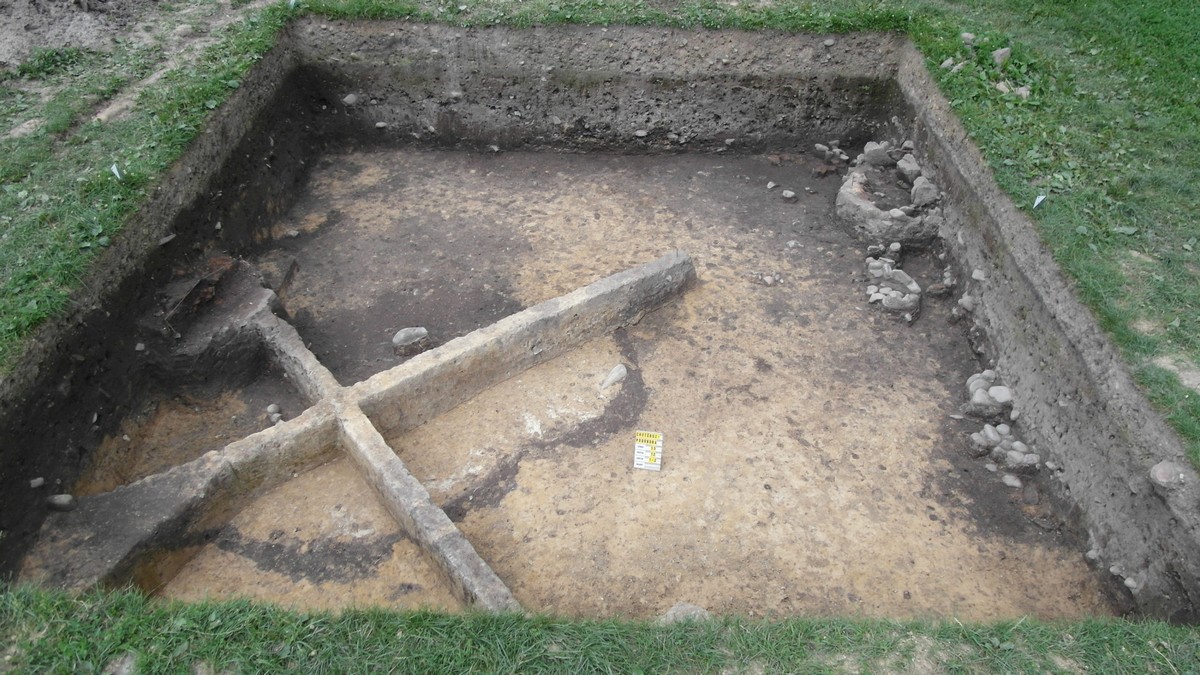
The relic of a building from the Hallstatt Period with fragments of crucibles