

Ceramic and other vessels
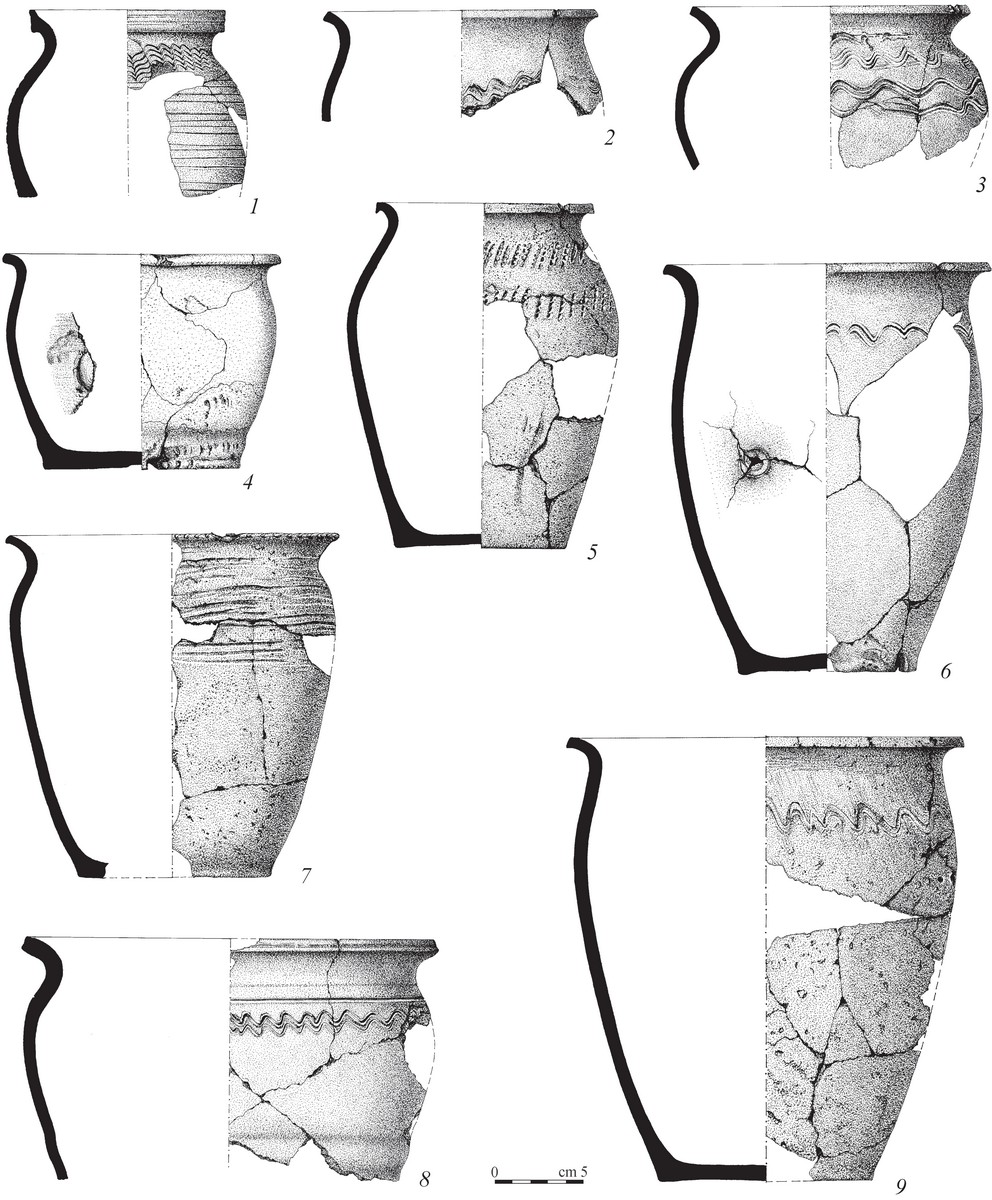
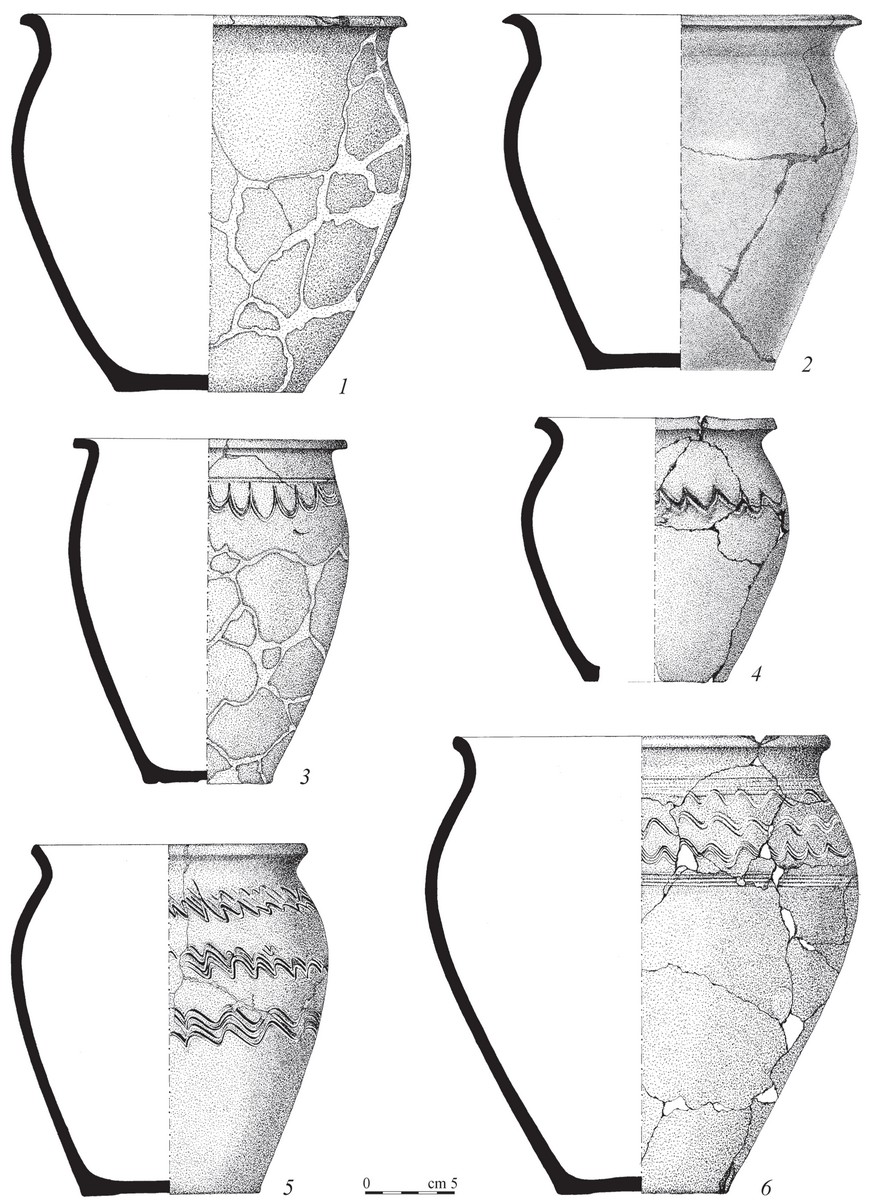
The vast majority of archaeological finds are represented by pottery. Some prehistoric cultures were even named after typical pottery. The study of decorative and production technologies of pottery enables a basic chronological classification of find contexts. Put simply: pottery of the Lusatian Culture and of the Slavs can be clearly distinguished because it has been manufactured in a similar, often even the same, style on the whole settlement territory of the one or the other people.
Pottery of the Lusatian Culture often seems to be nicer and of higher quality than the later Slavic pottery. It has not yet been made with the help of a potter’s wheel, but its producers were able to achieve an extraordinarily high quality of their products. The nicest vessels are high-fired, black-coloured, polished to a high gloss, and their decoration is often very rich. Remnants of painted pottery occur very rarely. Besides ceramics also existed bronze vessels but they must have been so expensive and luxurious that they surely were not intended for daily use. Among them are mostly bronze cups richly decorated with hammered patterns. Their shape reminds of the above-mentioned ceramic cups, or, more precisely, pottery sometimes tried to imitate these rare metal vessels.
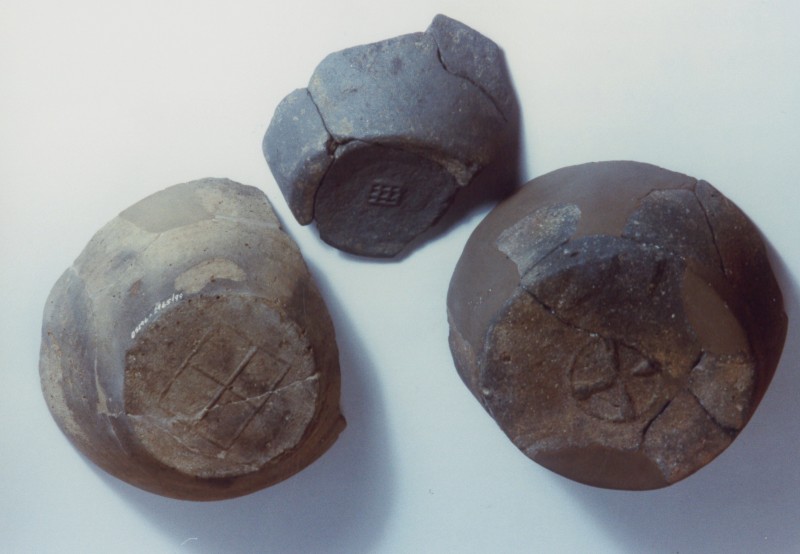
Potter´s marks
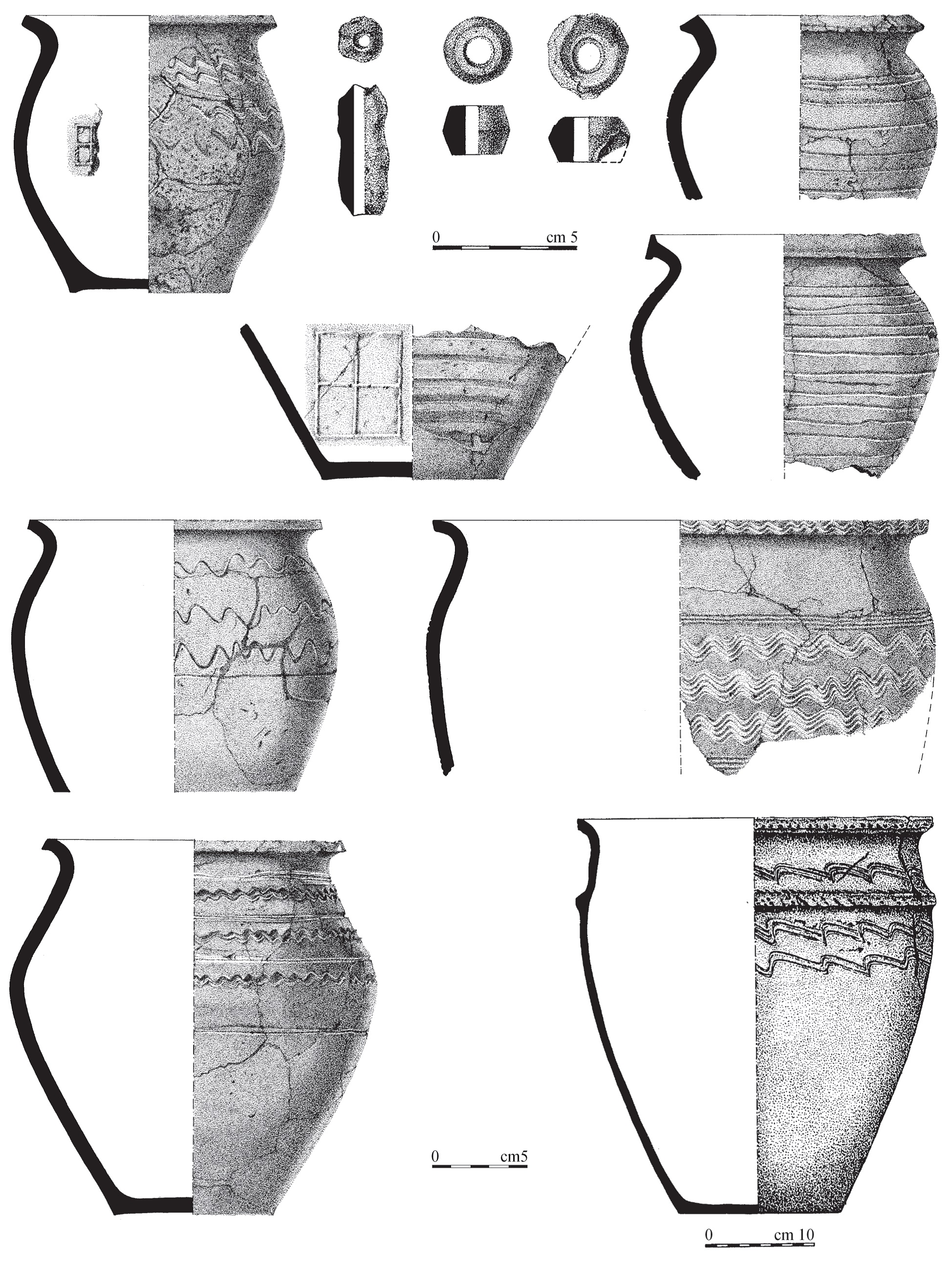
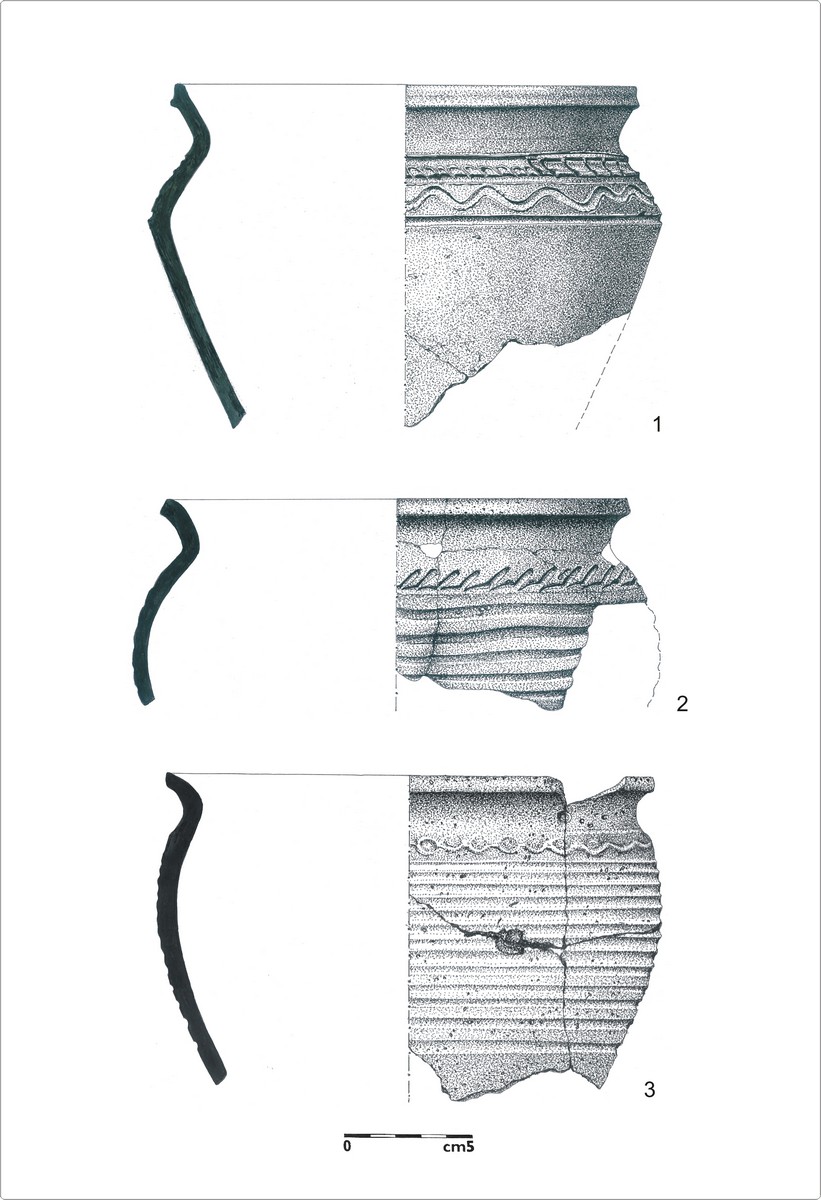
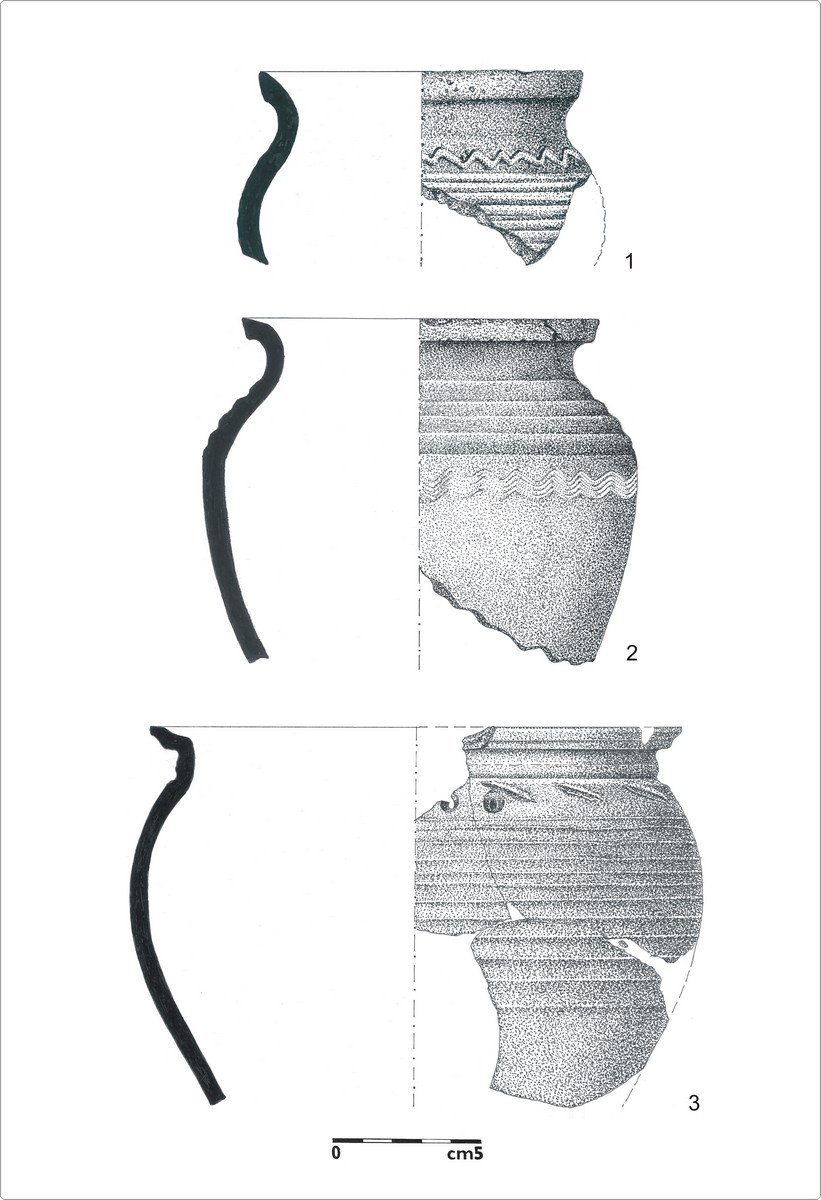
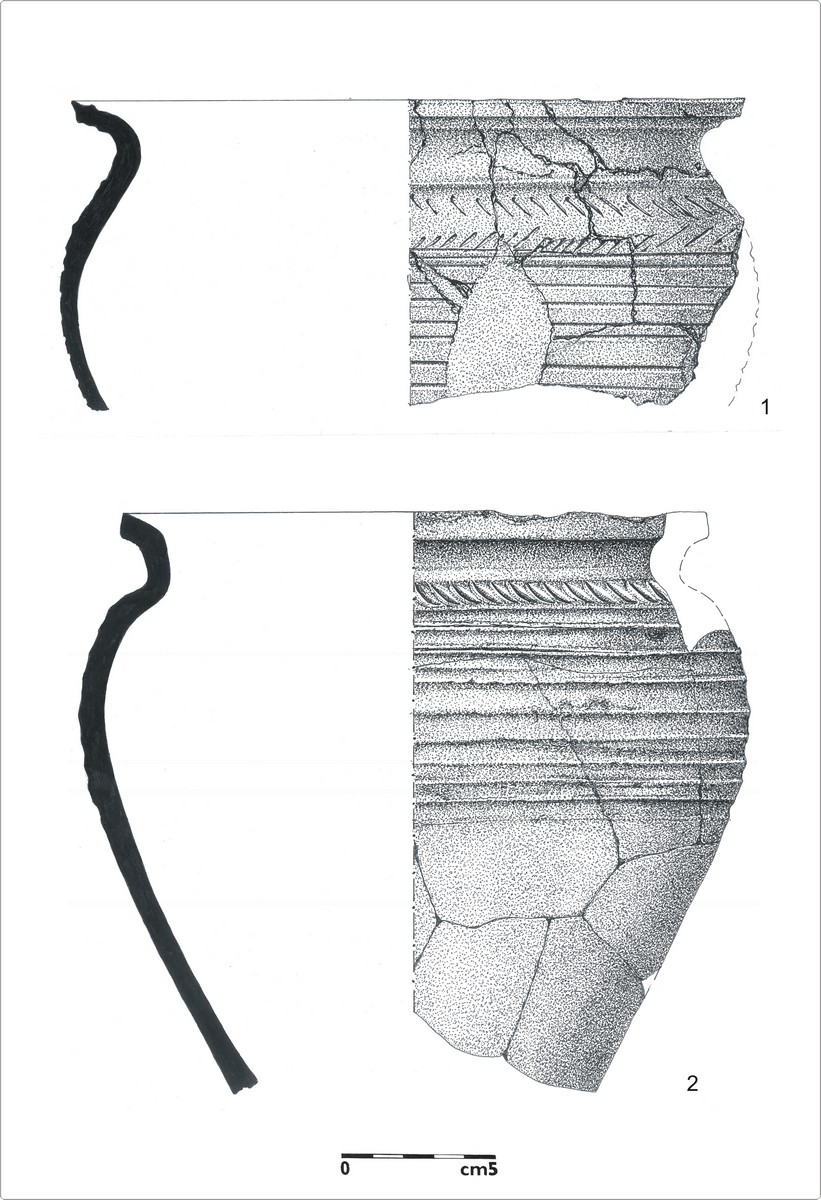
Slavic pottery appears coarser at first sight, however, we should not underestimate the craftsmanship of its makers. Unlike the Hallstatt Period, the 9th century Slavs have known and used the potter’s wheel. The vessels are high-fired and the clay is improved with added temper. They are mostly decorated with the so-called Slavic wave, which we can find in various forms until as late as the High Middle Ages. Other types of decoration also occurred. At the bottoms of vessels are sometimes applied potter’s marks, which may have served for identification of products; their supposed cultic purpose is disputable. From Chotěbuz we know several vessels with such bottom marks and their occurrence has been associated with Great Moravian influences. A special ceramic object, which is very typical with Slavic environment, is the so-called roasting tray. Wooden vessels, such as large and small buckets, bowls, baskets etc., were surely widely used but they are only very seldom preserved. Metal vessels are very rare, they did not belong to daily standard.