

Clothing
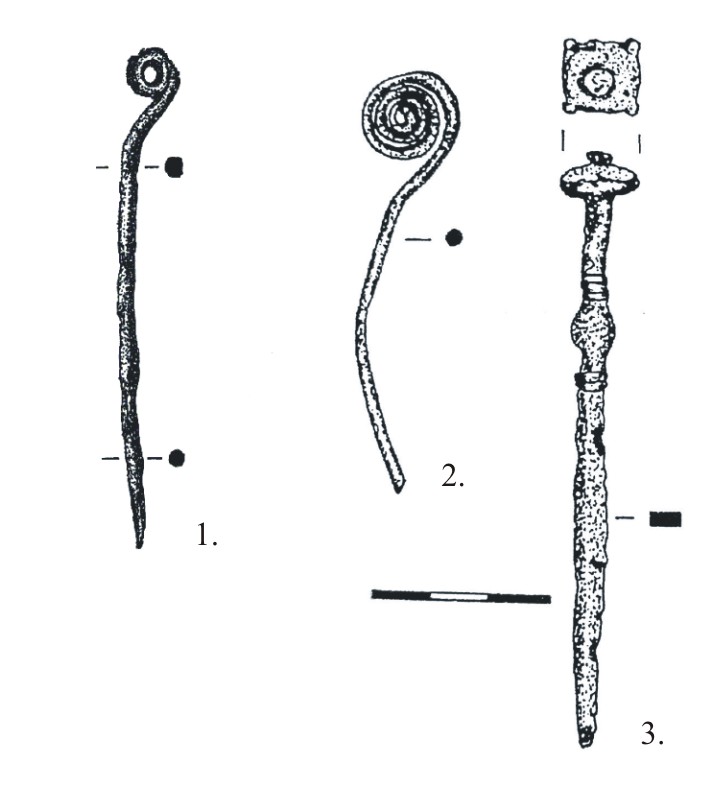 It is difficult to speak of prehistoric clothes, we can only suppose that the dominant materials were wool and linen, and leather and fur surely also have been used. Weaving and cloth manufacture as well as the use of natural dyestuffs were known for a long time already. In the Bronze Age, bronze pins became widespread as garment components, and brooches gradually occurred as well.
Bronze Age people liked to decorate themselves. The above-mentioned pins used to be richly ornamented and besides them also existed neck rings, large massive brooches, bracelets, and decorative ring-shaped or spectacle-shaped pendants. Bronze as the main material was gradually supplemented with another metal – iron; gold and silver were very rare in the region. From Chotěbuz of that time also comes a massive iron bracelet. Several fragments of glass beads also were found here.
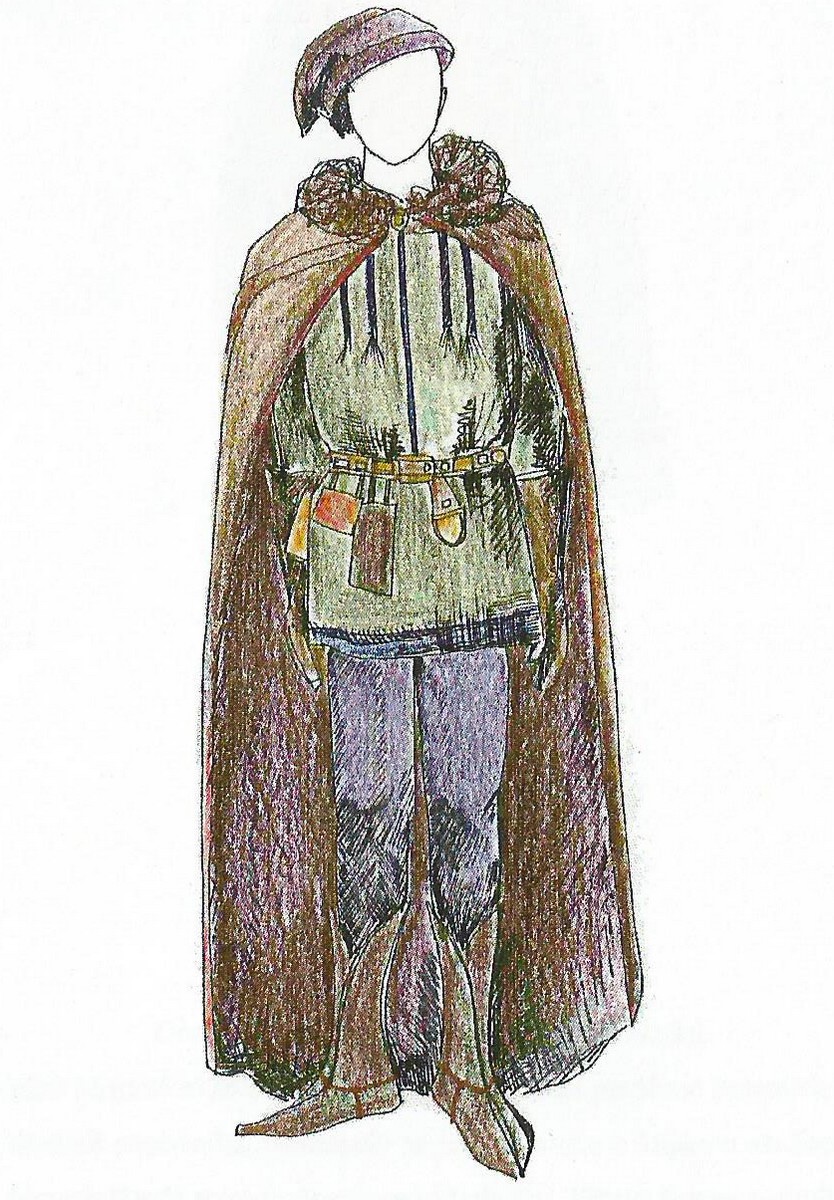
The possible reconstruction of noble man clothes
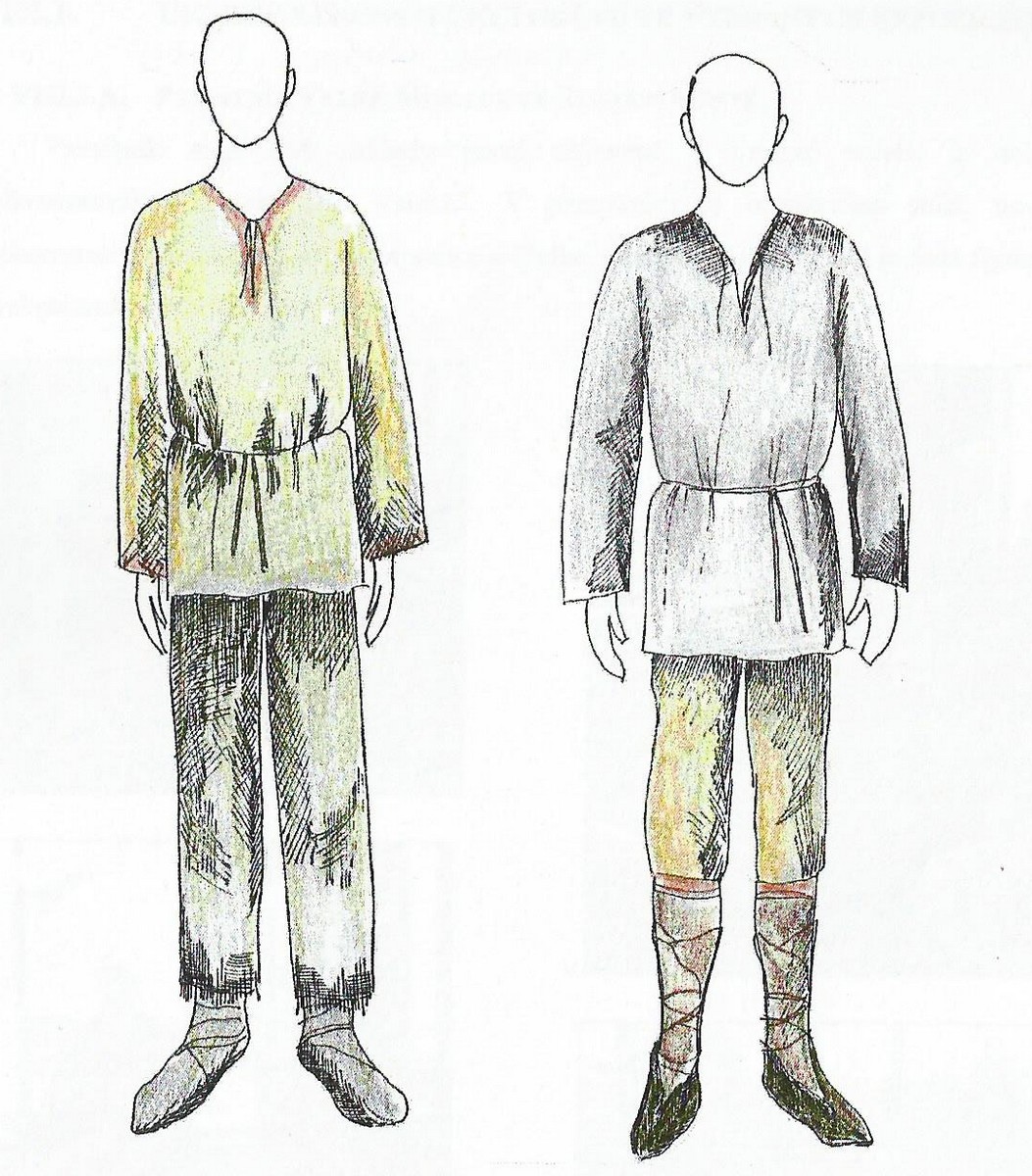
The possible reconstruction of village man clothes
The situation with the Slavs is a little clearer. From Chotěbuz we know the evidence of both flax growing and sheep breeding. We know that the Great Moravian elite class was already able to buy silk, but this material was reserved for the wealthiest individuals only. The spinning of wool is associated with an object which occurs very often among the finds: spindle whorl. With textile production at Chotěbuz are also associated the shears found. Fabrics have been dyed with natural dyestuffs; colourfulness was desired but sometimes hard to achieve. From among typical colours we can relatively easily obtain yellow, green and brown or red. Deep red and blue colour were rare and symbolised nobility at first sight already.
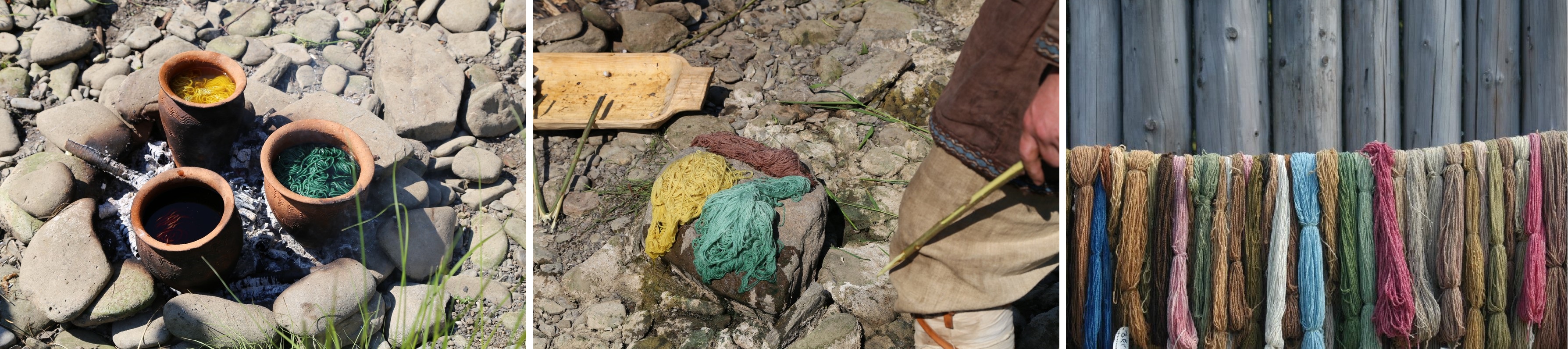
Dyeing with natural dyestuffs offers plenty of colour shades.
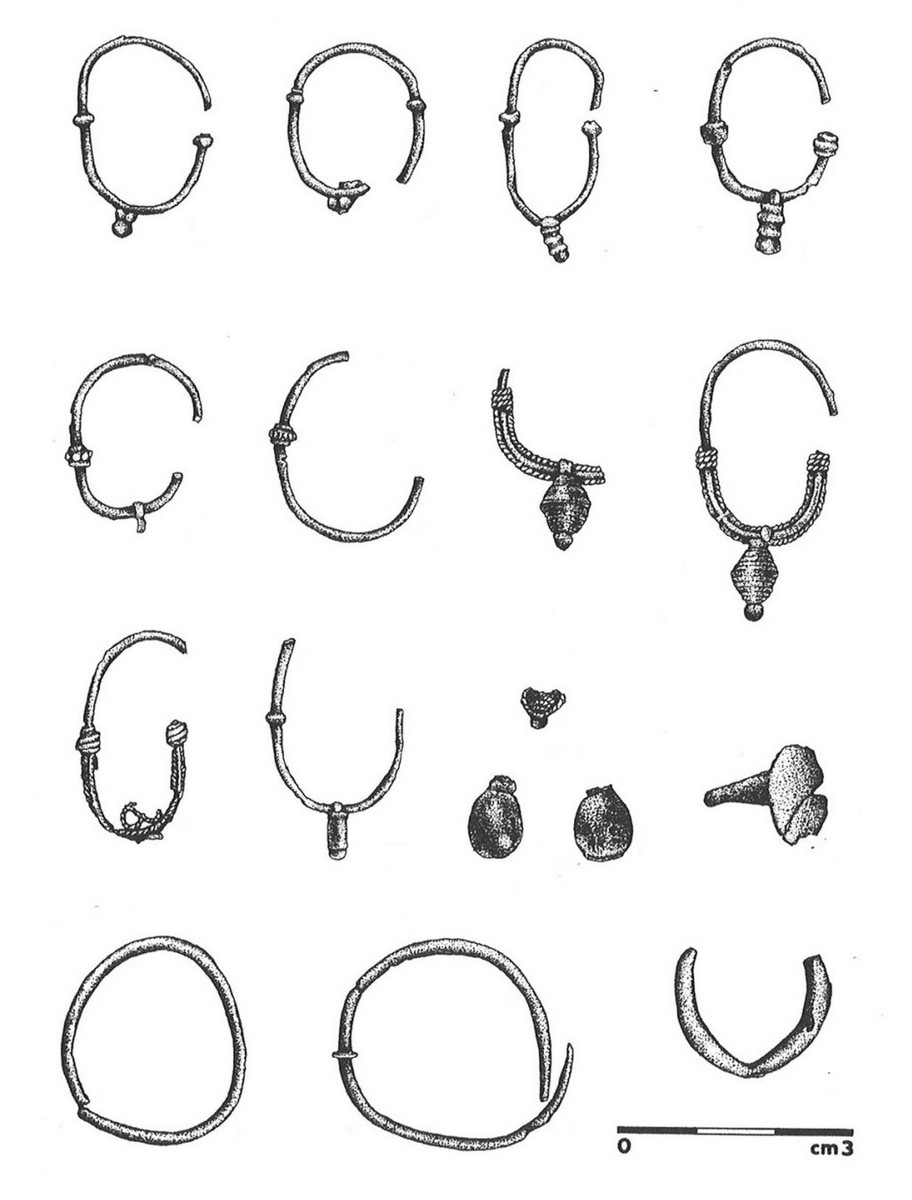
However, throughout the Slavic world we can find such a wide spectrum of jewellery that it is not possible to describe all types. Among the most frequent personal ornaments are earrings, usually made from bronze or silver, rarely from gold, and sometimes only silvered or gilt. An assemblage of 15 scorched earrings from our hillfort refers to Great Moravian style and indicates a strong influence of Great Moravia on Chotěbuz after its being conquered. In the Great Moravian environment also occurred buttons, that is decorative spherical ornaments intended for fastening clothes together, various types of pendants, and strap ends which often were very richly ornamented – however, none of these objects were found at Chotěbuz. Typical Slavic ornaments of the mid-10th to 12th centuries were lock-rings, usually those with S shaped loop, which were applied to a headband or woven into hair. From Chotěbuz we know a silver specimen.
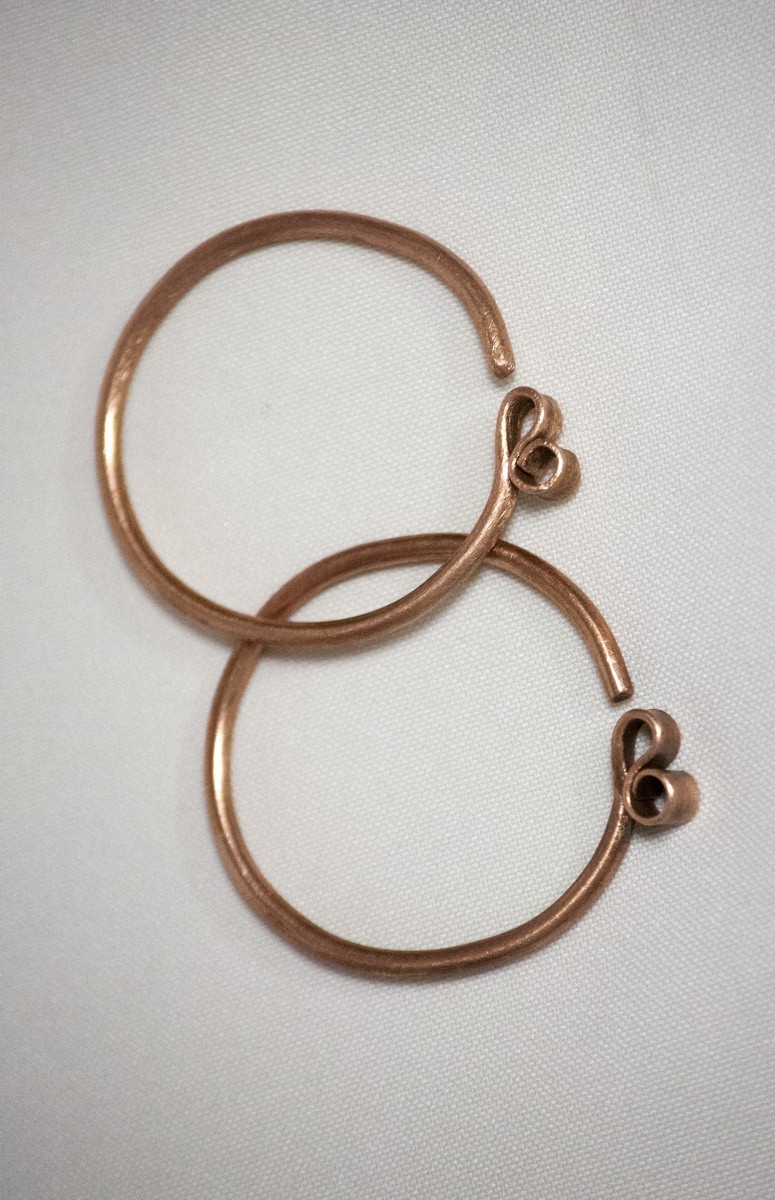
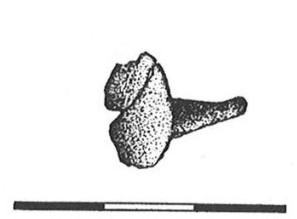
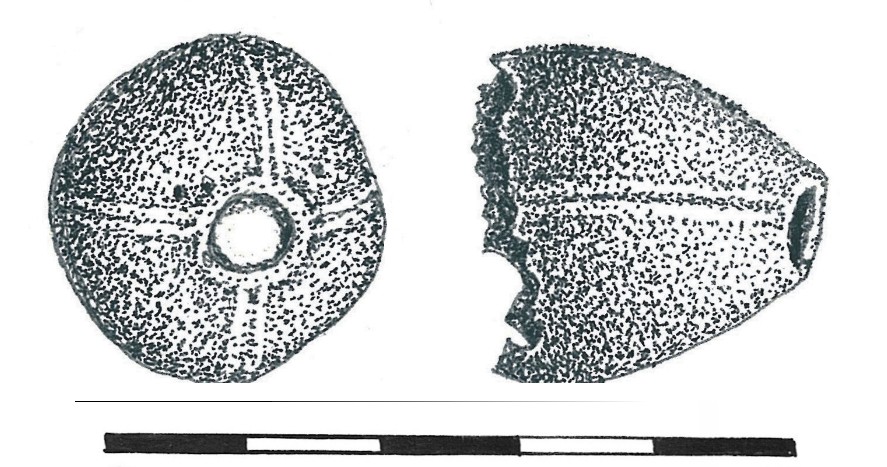
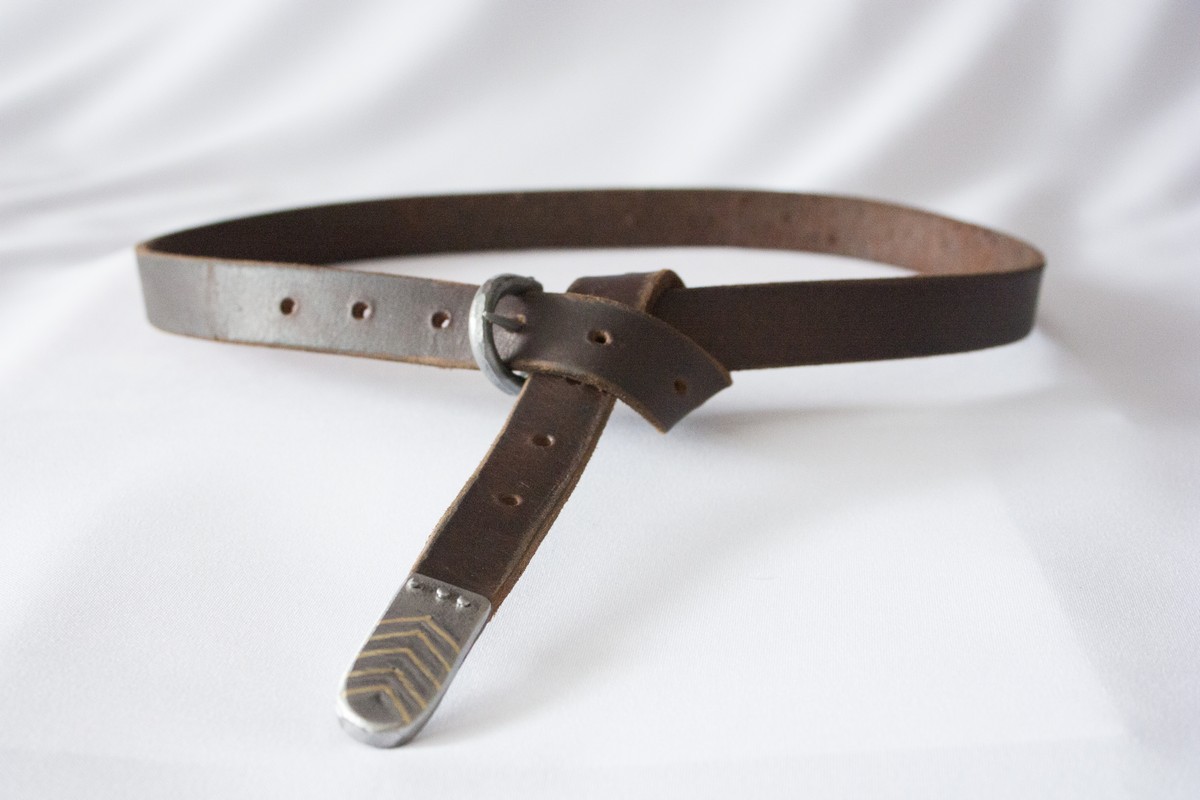 In the Slavic environment frequently occur bone and antler artefacts, but they were not yet found at the Chotěbuz hillfort. An important material also was leather. A long leather belt was not only a practical accessory, but with the decoration applied it also represented its owner. Particularly the armed retinue had to be equipped as well with quality leather boots. In common people we would rather find other materials.