

In the kitchen
How important was dining?
In prehistoric and medieval times, the preparation of meals and dining were very important. The ruler and his closest retainers strengthened their power through the medium of feasts. The more opulent the feast, the more significant the lord. The equipment from such feasts is mainly found in the graves of rulers, which contain precious bowls, pots or beakers made of fired clay or exceptionally of glass.
What did the people in prehistoric and early medieval times cook?
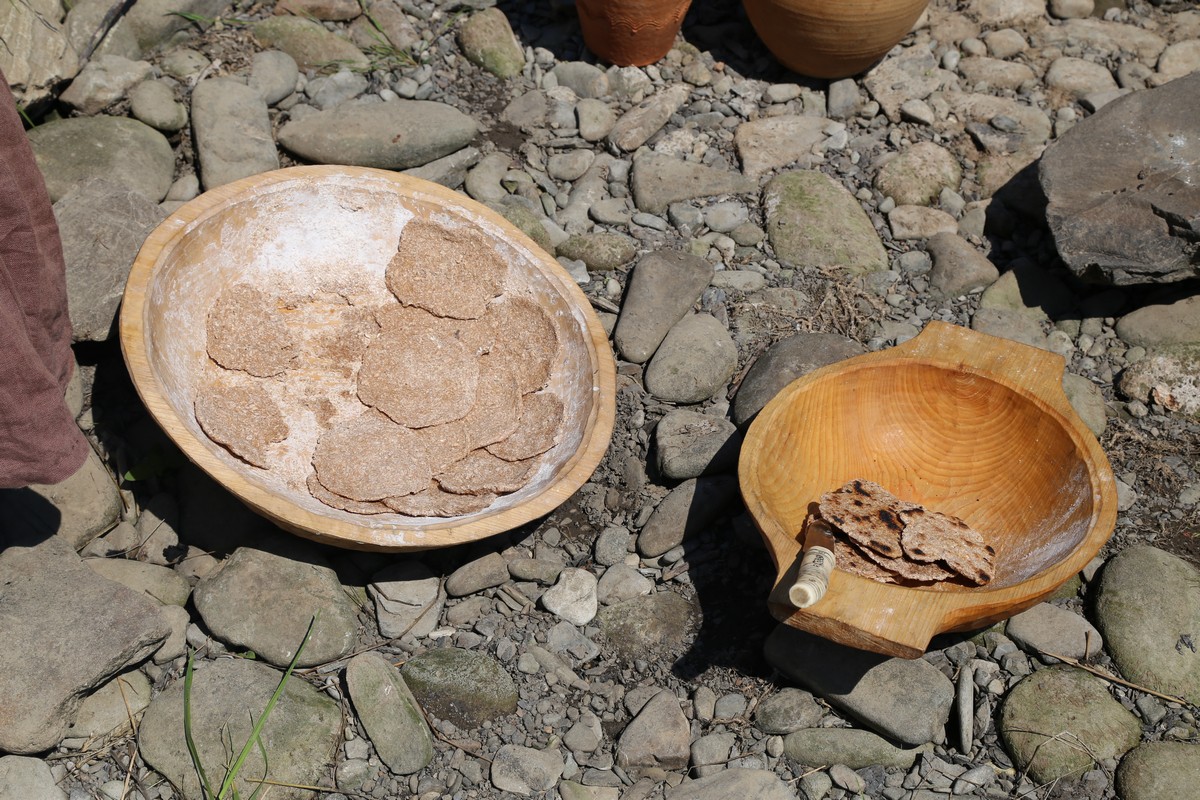
The Slavic bread
Among frequent food was bread, which rather looked like flatbread. To us it would probably seem as the present-day wholemeal bread. The diet also contained various porridges, mainly from cereals (usually salted). Meals were seasoned with salt, honey or herbs (marjoram, mint, caraway). Pepper or cinnamon were rare because they had to be imported, so that only rulers could afford them. Meat has mainly been backed, boiled as well as stewed, frying was probably more difficult.
Everybody likes sweets and feasts! And what about prehistory and Early Middle Ages?
In the Early Middle Ages we suppose the existence of sweet pastry (in prehistory we are not sure). Among them mainly were cakes, which were part of various rituals and represented the symbols of harvest. One of these rituals among the Slavs on the Rügen Island was described by the 12th century historian Saxo Grammaticus. During the ritual, a priest brought a large honey cake, behind which he has hidden. Then he asked the assembled people whether they saw him and they answered him ritually: “Yes”. The priest responded that he wished they would not see him the next year – that is may there be abundant prosperity and may the cake be larger.
And what about “health food”?
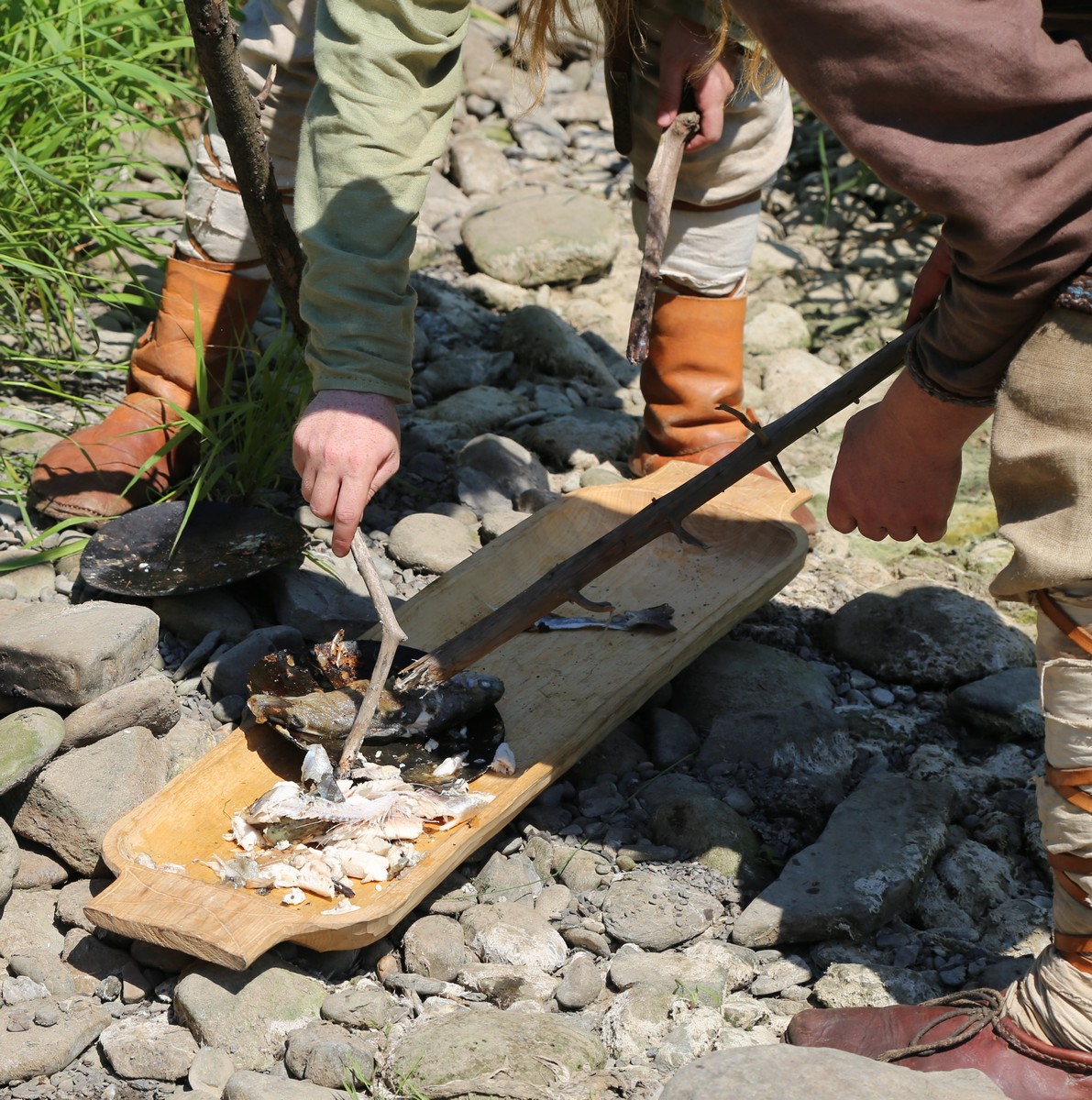
Carving of a fish
This food also was part of the diet. Early medieval diet often contained fish. Also popular naturally were vegetables and fruit, from various celeries to apples, pears or cherries. Their appearance, however, was quite different from the present-day fruits. Carrot, for example, was quite seedy, yellowish, not very sweet and rather rooty. It has rather been grown because of the seeds which were used as spices.
Were cereals important?
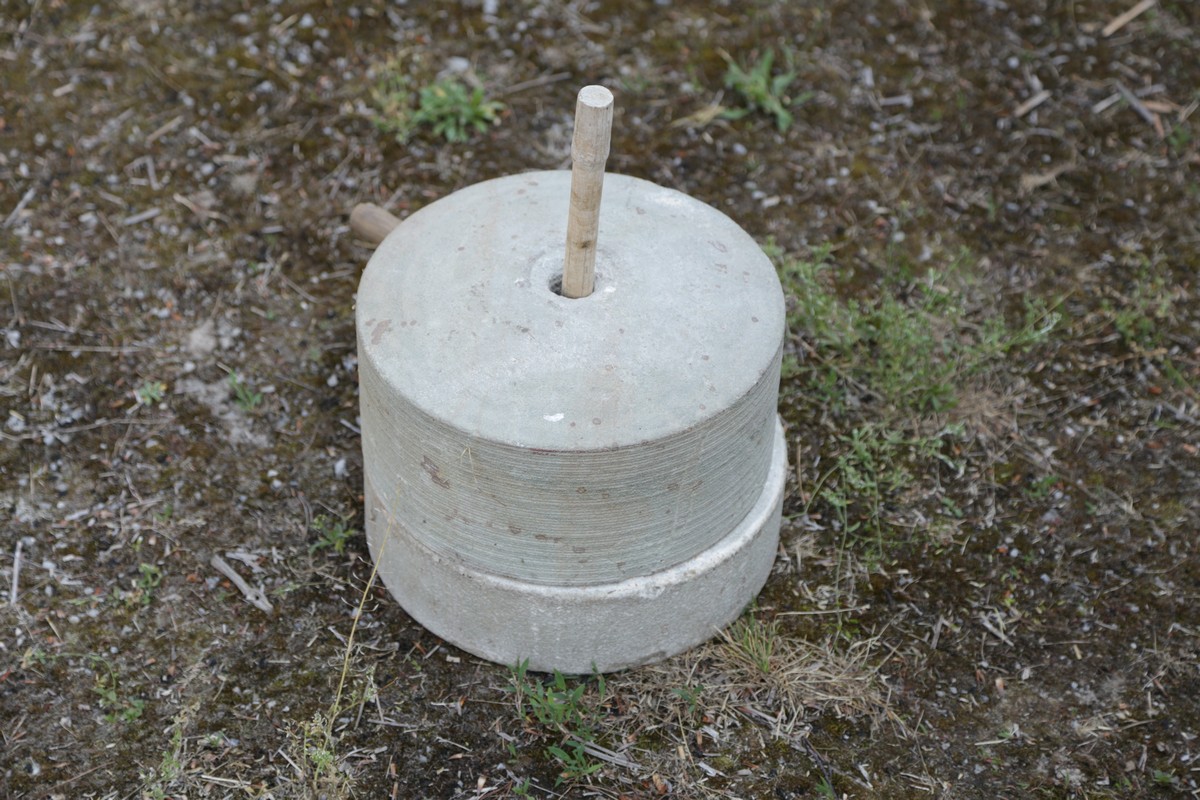
The rotary hand quern
Grain was an important component of diet, therefore it had to be processed and ground properly. Today it is made by sophisticated machines, but in prehistoric times grain has been crushed with the help of simple hand-operated devices. Originally a saddle quern has been used – a simple stone slab with a handstone (rubber) moved back and forth. However, using this device was wearing and time-consuming. Smart people, probably the Celts, invented rotary querns. Grain is poured through a central hole into the space between the bottom stone and the upper hand-operated rotating stone, and the ground flour falls out at the edges. Such rotary querns were also found at the hillfort in Chotěbuz and their replicas are waiting for you to be tried out!
Man cannot live without water. And what about the other beverages?
Did you know that:
Beer has already been brewed in prehistoric times, maybe around the year 3,000 BC, but at that time it did not yet contain hop and it was often seasoned with various aromatic herbs. Hop beer began to be brewed since the 10th century AD, but at that time it was relatively weak compared to the present-day beers..
The fundamental drink was water (above all natural running water). But it has not been drunk in pure form – people made of it herbal decoctions and seasoned it with sweet tree sap. Since prehistoric times already, a particularly important beverage was beer, in which the content of germs was lower than in water and beer at the same time provided human body with important nutrients and energy. Also important to the Slavs were mead and wine, of course.