

Crafts
Do you know, what are prehistoric or early medieval ceramics and how they looked like?
Ceramic ware comprises pottery vessels of various shapes and functions, religious statuettes or toys. Pottery of the first settlement phase in our hillfort (pottery of the Lusatian Culture) was onion-shaped. Among typical forms were two-handled vessels, bowls or simple cups. Pottery of the Lusatian Culture has not yet been made with the help of a potter’s wheel but it was hand-built. Despite this, Lusatian pottery is visually nicer and often of higher quality than the later Slavic pottery. It was namely high-fired, black-coloured, burnished to a high gloss, and decorated with various patterns and colours. Remnants of painted pottery occur very rarely; from our hillfort we know a few such finds.

The ceramics of Lusatian Culture
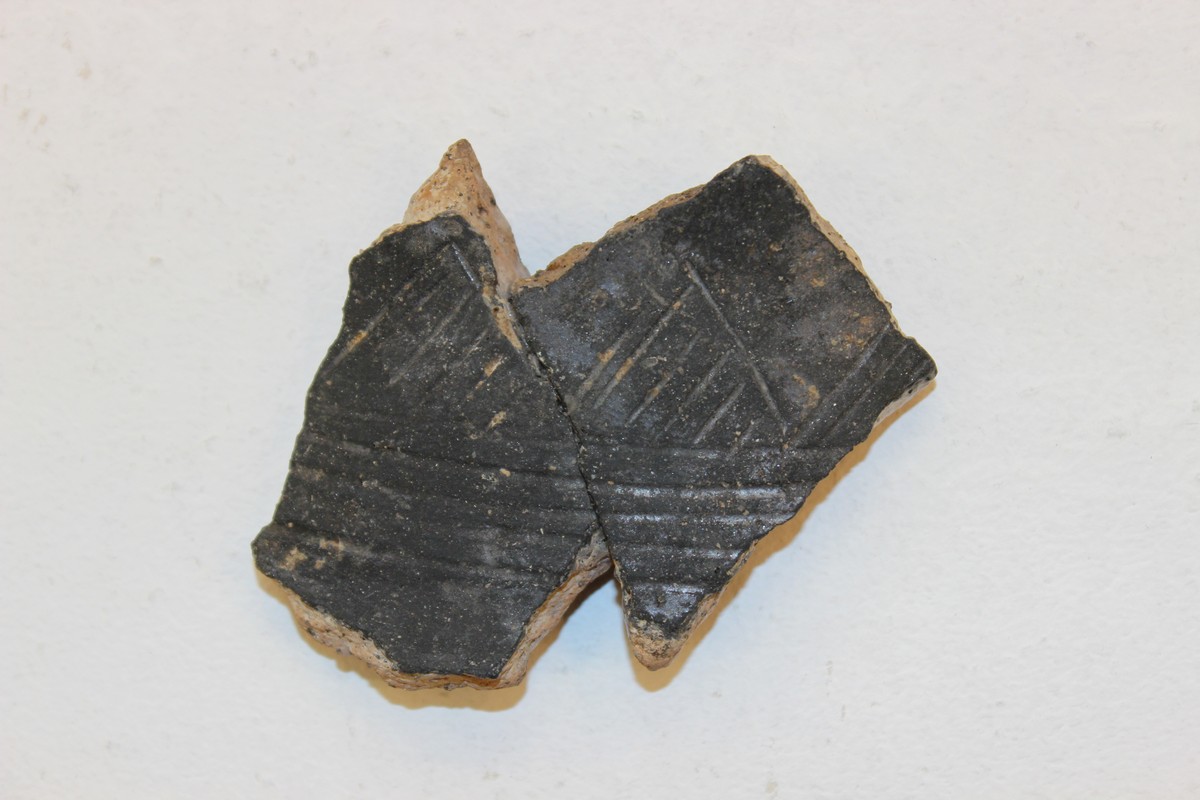
The ornaments of Lusatian Culture ceramics
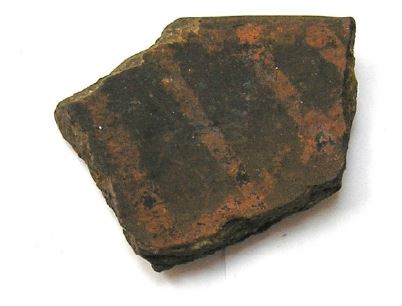
The decorated Hallstatt ceramics
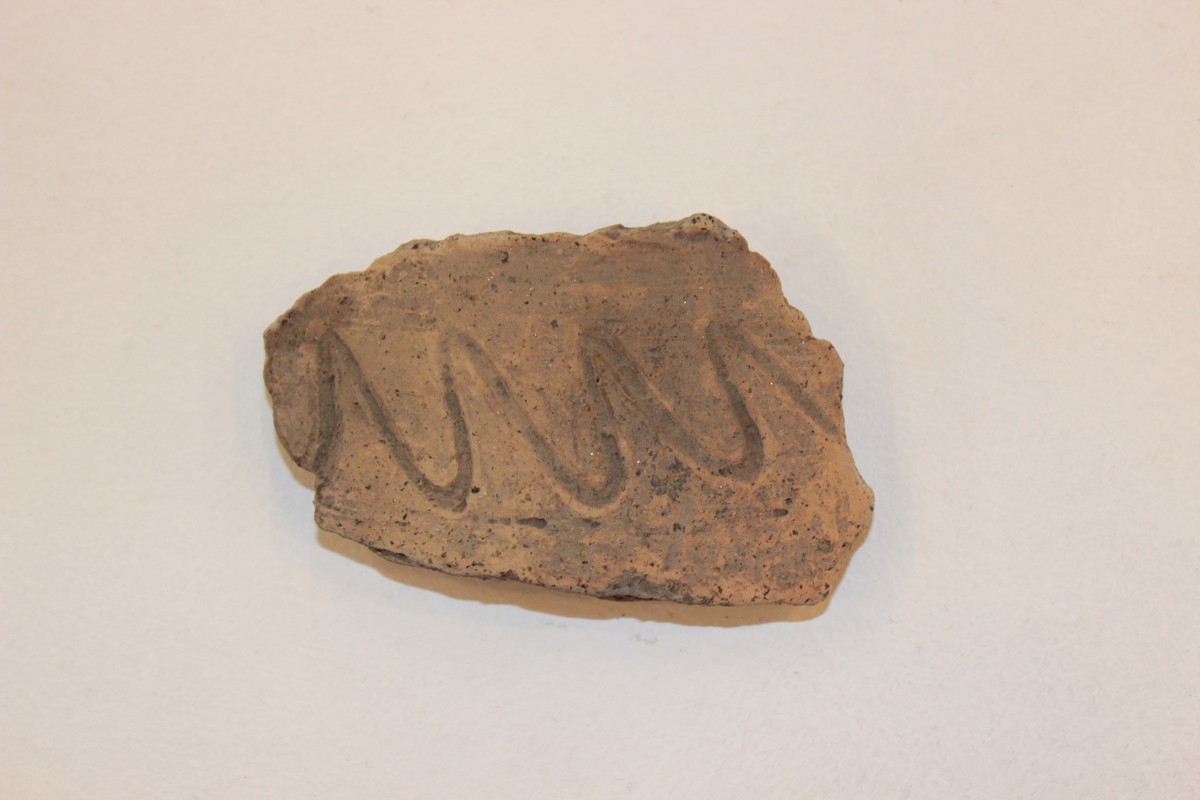
Slavic wave pattern
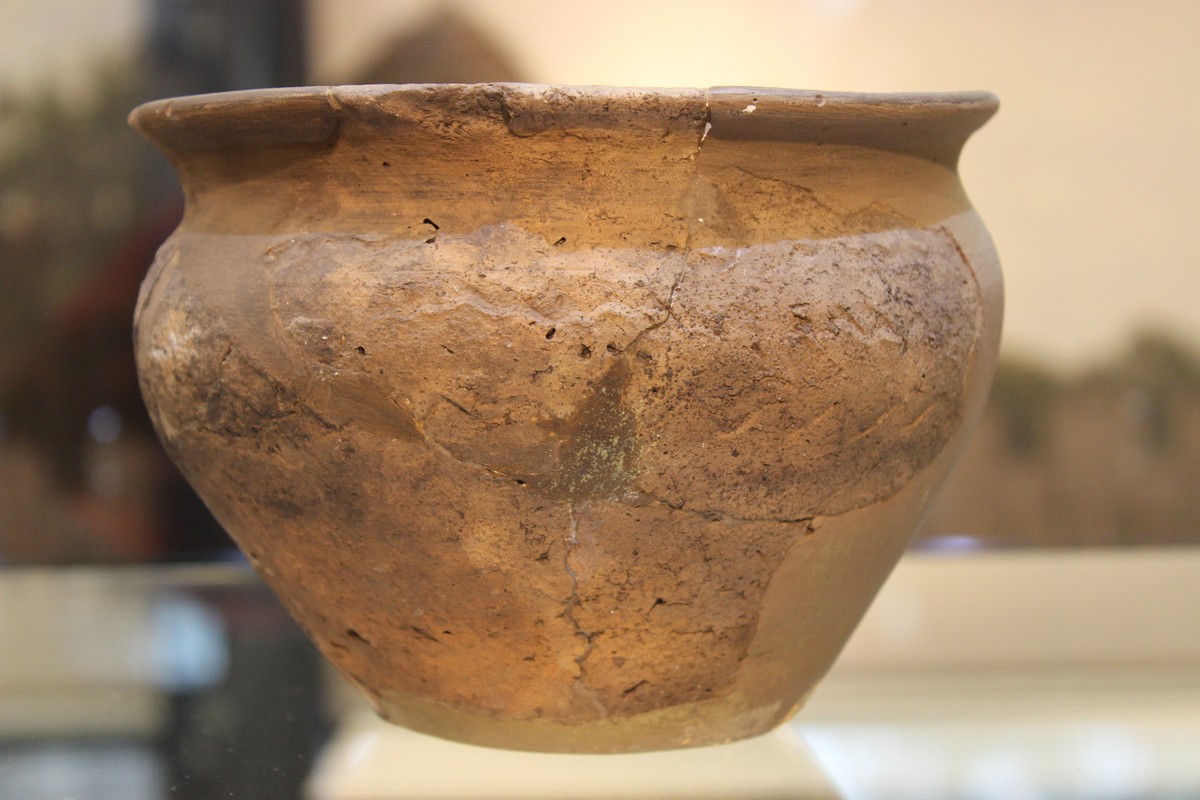
The Slavic ceramics
Slavic pottery appears coarser at first sight, even though the Slavs have already used the potter’s wheel. Among their vessels often were pots and mugs without handles, with wide neck. A ceramic object, which was very typical with Slavic environment, was the so-called roasting tray, which has been used for roasting grain and baking flatbread. Slavic vessels were high-fired and solid because the clay used was improved with the so-called temper (e. g. straw). The vessels were mostly decorated with the so-called Slavic wave pattern.
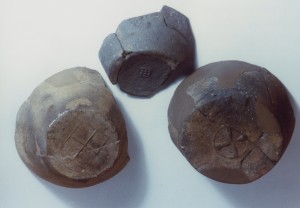
The Slavic ceramics marks
The bottoms of vessels were sometimes equipped with potter’s marks, which may have served as signatures of individual producers. In Chotěbuz also can be found several vessels with such bottom marks!
Which other materials have been processed?
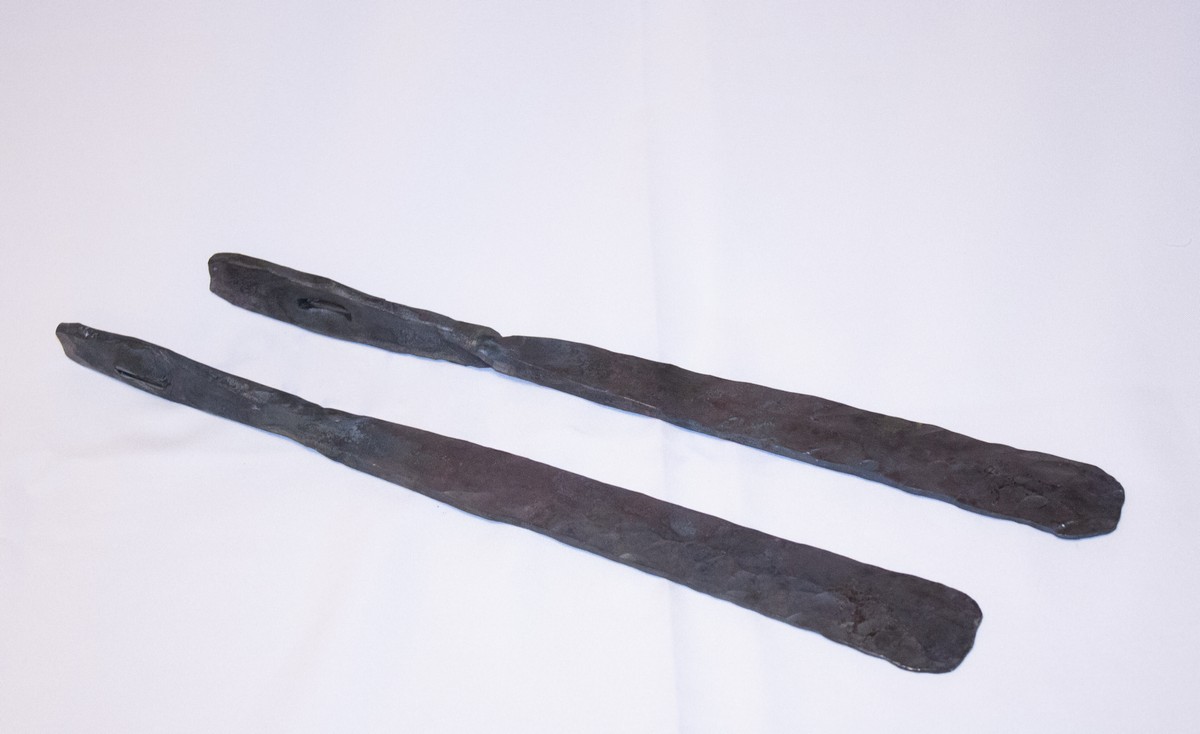
The iron ingots
The replica of a bucket
People in prehistoric and early medieval times used not only ceramics but also various wooden vessels which, however, are only very seldom preserved due to fast decay of wood in the ground. Also rare are metal vessels, even though metal was an important material. The Slavs have mainly used iron. Evidence of iron production, e. g. ingots, were found at Chotěbuz. Do you not know what an ingot is? It was a piece of iron, whose shape reminded of an axe. Iron in this form has been stored or traded. In the hillfort besides ingots also smithies or furnaces were found, the latter looking like small igloos.